
Step 1
Site Drainage Assessment
We map the existing grade, identify drainage direction, locate low spots and collection zones, and assess exit point conditions at the property edge to understand what the drainage system needs to handle.
Loading...
Service Detail
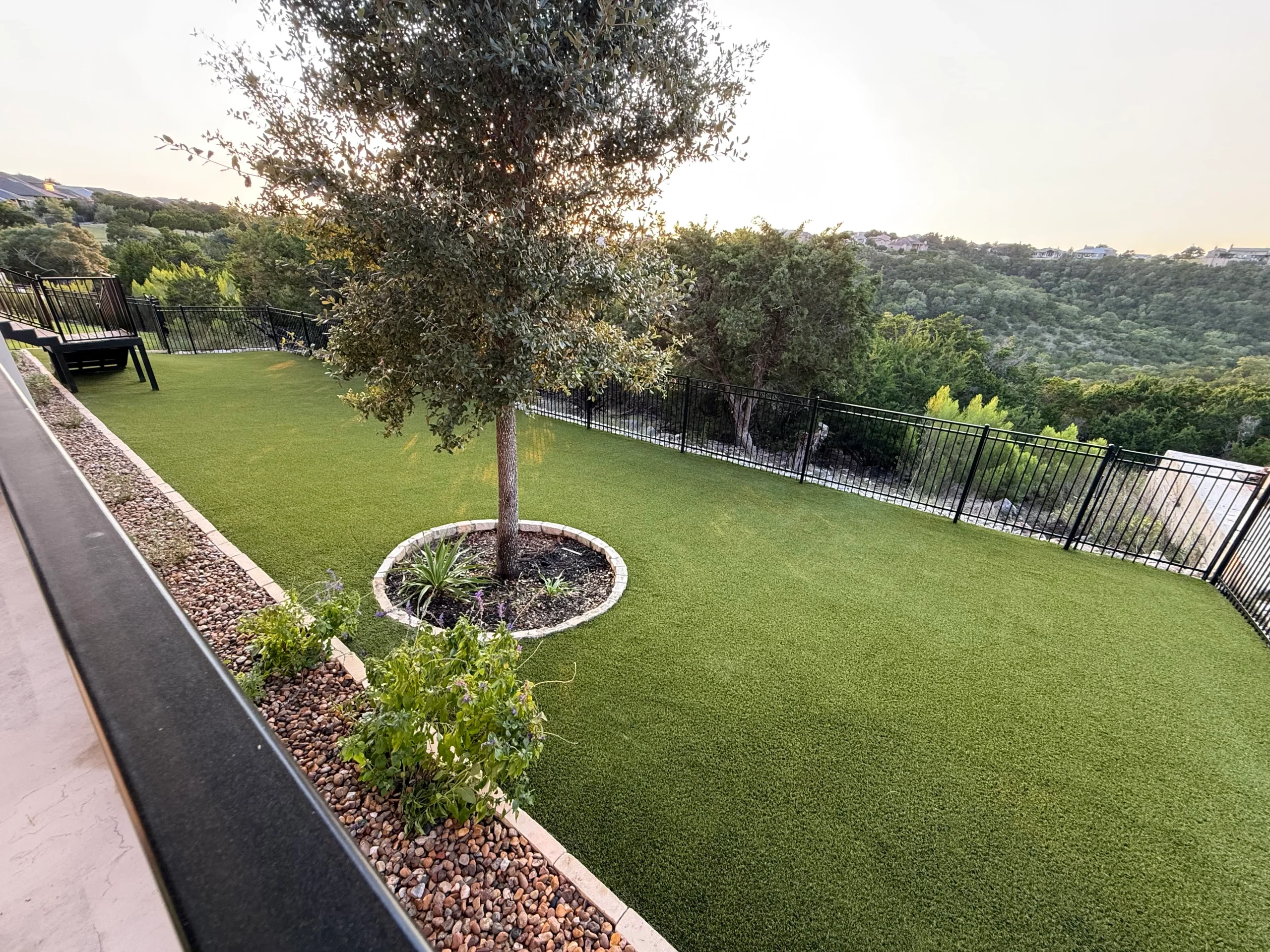
Artificial turf drainage system installation for Deer Park properties — engineered for Gulf Coast rainfall volumes and Harris County clay soils that challenge standard drainage approaches.
Main Introduction
Drainage is the most consequential decision in any Deer Park turf installation. Get it right, and the yard drains quickly after a Gulf rain event, stays usable, and supports turf system performance for the full installation lifespan. Get it wrong, and standing water lingers, infill migrates toward drainage failures, fiber backing deteriorates from chronic moisture, and the homeowner or facility manager spends years managing a problem that should have been engineered away at the beginning.
Artificial turf drainage system installation in Deer Park, TX takes the Gulf Coast environment seriously. Harris County's clay soils have low natural percolation rates — water moves horizontally toward surface drainage far more readily than it moves vertically down through the soil profile. Standard drainage layer specifications designed for sandy or loamy soils in drier markets do not translate directly to Deer Park conditions. We design drainage systems for the actual soil conditions and rainfall volumes that Deer Park properties experience.
The area's rain pattern is characterized by fast-moving, high-volume Gulf weather events — the kind that drop two to three inches in a few hours — followed by periods of high humidity that slow surface drying. A drainage system for Deer Park needs to handle the peak flow rate of those events, not just the average annual rainfall distributed evenly. Under-designed drainage systems become visible failures on the first significant storm after installation.
For properties in low-elevation areas near the bayou corridors — a common situation in Heritage Park and the Battleground subdivision — drainage design also needs to account for the direction of sheet flow across the yard and the capacity of the existing drainage infrastructure at the property edge. We assess these conditions during the site visit and design a drainage system that works with the property's natural drainage direction rather than against it.
What Is Included
Drainage system installation with Artificial Turf of Deer Park begins with a site drainage assessment that maps the existing grade, drainage direction, low spots, and exit point conditions at the property. This assessment directly informs the drainage layer specification, base grading plan, and any supplemental drainage components required.
Drainage system installation covers base grading for positive drainage direction, sub-base compaction, drainage aggregate layer installation to specified depth, and any supplemental drainage channel or perimeter drain components required by the site conditions. All drainage work is designed to function as part of the complete turf system — not as an independent element added on top of a generic base.
Post-installation documentation identifies the drainage exit points and drainage direction designed into the system so property owners understand how the system functions and can monitor it appropriately.
Process Steps
Step 1
We map the existing grade, identify drainage direction, locate low spots and collection zones, and assess exit point conditions at the property edge to understand what the drainage system needs to handle.
Step 2
Based on the site assessment, we develop a drainage system specification covering base grading, aggregate depth, and any supplemental drainage components needed for the site conditions.
Step 3
The base is graded to establish positive drainage toward the designed exit points. Grades are verified before sub-base compaction begins.
Step 4
Drainage aggregate is installed to the designed depth and compacted appropriately. Supplemental perimeter or channel drainage components are installed where specified.
Step 5
After drainage layer installation, grades and exit points are verified. The property owner receives documentation of the drainage system design and guidance on monitoring performance.
Use Cases
Turf drainage system installation serves Deer Park properties where drainage design is a primary concern — either due to site-specific conditions, Gulf Coast rainfall volumes, or the specific turf application being served.
For Heritage Park and Battleground subdivision homes where the yard's proximity to drainage features means standing water management is a baseline requirement for any outdoor surface.
For Deer Park households where pet use combined with Gulf rainfall requires drainage capacity well above standard residential specifications.
For Deer Park ISD campuses and community athletic facilities where the existing site drainage is inadequate for the rainfall volumes and intensive use schedules the field supports.
For Deer Park properties where a previous turf installation developed chronic standing water problems due to inadequate or improperly designed drainage.
Why Choose
Drainage design for Deer Park properties requires local knowledge. The coastal plain soil conditions, the direction and volume of Gulf weather events, the flat topography, and the bayou system drainage patterns in this area create a context that is genuinely different from many other Texas markets. Artificial Turf of Deer Park designs drainage systems based on what actually happens here — not on generic specifications developed for different environments.
For Deer Park homeowners who have dealt with chronic drainage problems in natural grass yards, a properly engineered turf drainage system resolves the underlying issue rather than covering it with a surface that will eventually fail for the same reason the grass did. We assess the drainage conditions honestly and design a system that handles them.
For Deer Park ISD athletic facilities and community sports fields, drainage performance directly affects how many days per year the field is usable. A field that drains in two hours versus twelve hours after a storm is a field with a fundamentally different operational profile.
Pricing Factors
Drainage system pricing is based on the site assessment and drainage design developed specifically for the property. We provide pricing after the assessment so scope and cost reflect the actual conditions at the site.
Service Area Coverage
Artificial turf drainage system installation serves all of Deer Park and the surrounding east Harris County area including La Porte, Pasadena, Channelview, Baytown, South Houston, Seabrook, Webster, League City, Clear Lake, Galena Park, and Houston east of Beltway 8.
Related Services
Frequently Asked Questions
Harris County clay soils have low natural percolation rates, Gulf weather events deliver high rainfall volumes quickly, and flat coastal plain topography means water has limited fall to move toward drainage exit points. All three factors require drainage design calibrated for local conditions.
Sometimes. It depends on whether the issue is base grading or drainage layer capacity. We assess the existing system before recommending whether supplemental drainage or a full system replacement is the appropriate solution.
Pet turf requires higher per-square-foot drainage rate in the turf backing and higher capacity in the drainage layer to handle the combined load of pet use and Gulf rainfall. We specify both components for the actual load.
Possibly. Low-elevation properties near bayou corridors may have specific drainage direction and exit point conditions that require more detailed assessment and design. We review these conditions during the site visit.
Yes. A drainage assessment can be scheduled as a standalone evaluation. Call to discuss your property's drainage situation.
Yes. Drainage system design and installation services cover the full east Harris County service area including La Porte, Pasadena, Channelview, Baytown, and surrounding communities.
Final CTA
Submit the form with service type, property address, and timeline details. You can also call directly for scheduling support.
Call